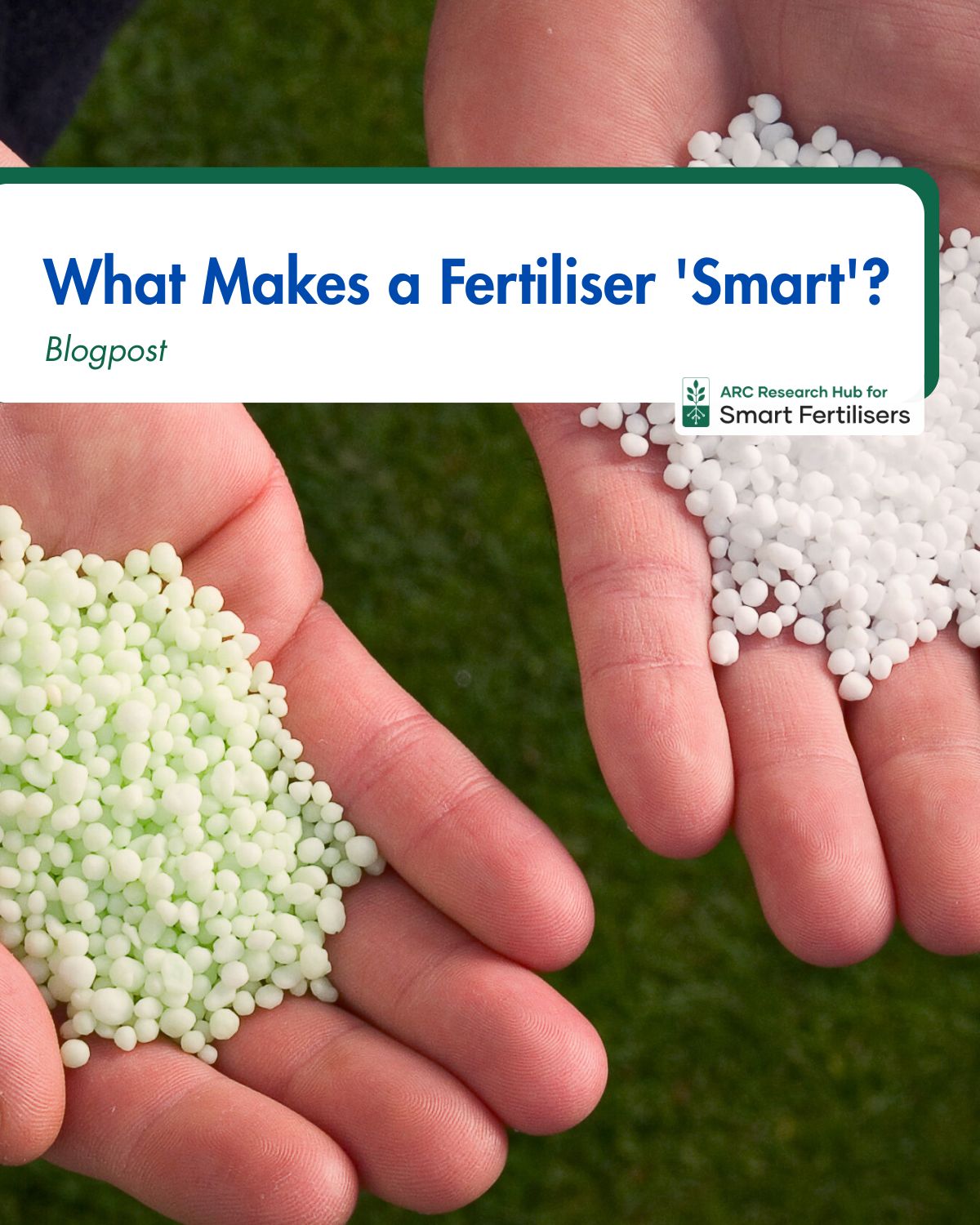
What Makes a Fertiliser ‘Smart’?
Part 2
When you hear the term “smart fertiliser,” you might picture high-tech sensors or AI-powered agriculture. While technology certainly plays a role, the real intelligence in smart fertilisers is about designing fertilisers that respond to the soil and plant environment in ways that match natural growing cycles.
So, what exactly makes a fertiliser “smart”? Let’s break down the science.
Inhibitor Technologies
Smart fertiliser technology isn’t just about coatings. Another approach uses chemical inhibitors that slow down specific soil processes. For example, nitrification inhibitors temporarily prevent soil bacteria from converting ammonium to nitrate, keeping nitrogen in a form less prone to leaching. Urease inhibitors slow the breakdown of urea, reducing ammonia volatilisation losses. These inhibitors work like molecular switches, buying time for plants to absorb nutrients before they can be lost to the environment.
When properly designed, smart fertilisers deliver multiple benefits:
- Higher nutrient use efficiency: By matching release to plant demand, more applied nutrients actually reach crops
- Reduced application frequency: One application can last an entire growing season
- Lower environmental impact: Studies show polymer-coated fertilisers can reduce N₂O emissions by 35% and NO emissions by 40%
- Improved crop yields: Steady nutrient availability supports consistent plant growth without feast-or-famine cycles
- Maximise sector-wide value and reduce farm costs: Potential to improve costs associated with fertiliser use and the reduction of environmental impacts.
Our work at the Hub
At the ARC Research Hub for Smart Fertilisers, our research focuses on both the engineering of new coatings (Theme 1) and in developing the next-generation of urease and nitrification inhibitors (Theme 2).
The aim? To create smart fertilising technologies that respond to precise soil conditions, temperature, moisture, and microbial activity to deliver nutrients exactly when and where plants need them.
The goal isn’t just to make fertilisers “smarter”, it’s to make them sustainable for long-term agricultural use both environmentally and economically.
Learn more about our ongoing research at the ARC Research Hub for Smart Fertilisers